

DRAC and Ghana Health Service Strengthen Collaboration to Advance NTD Interventions in Upper East Region DRAC and Ghana Health Service Strengthen Collaboration to Advance NTD Interventions in Upper East Region
Bolgatanga - The Development Research and Advocacy Centre (DRAC) participated in a high-level Steering Committee Meeting convened at the Regional Conference Room of the Ghana Health Service (GHS) to review progress under the NTDs Plus Project and reinforce institutional collaboration to improve the lives of persons affected by Neglected Tropical Diseases (NTDs).
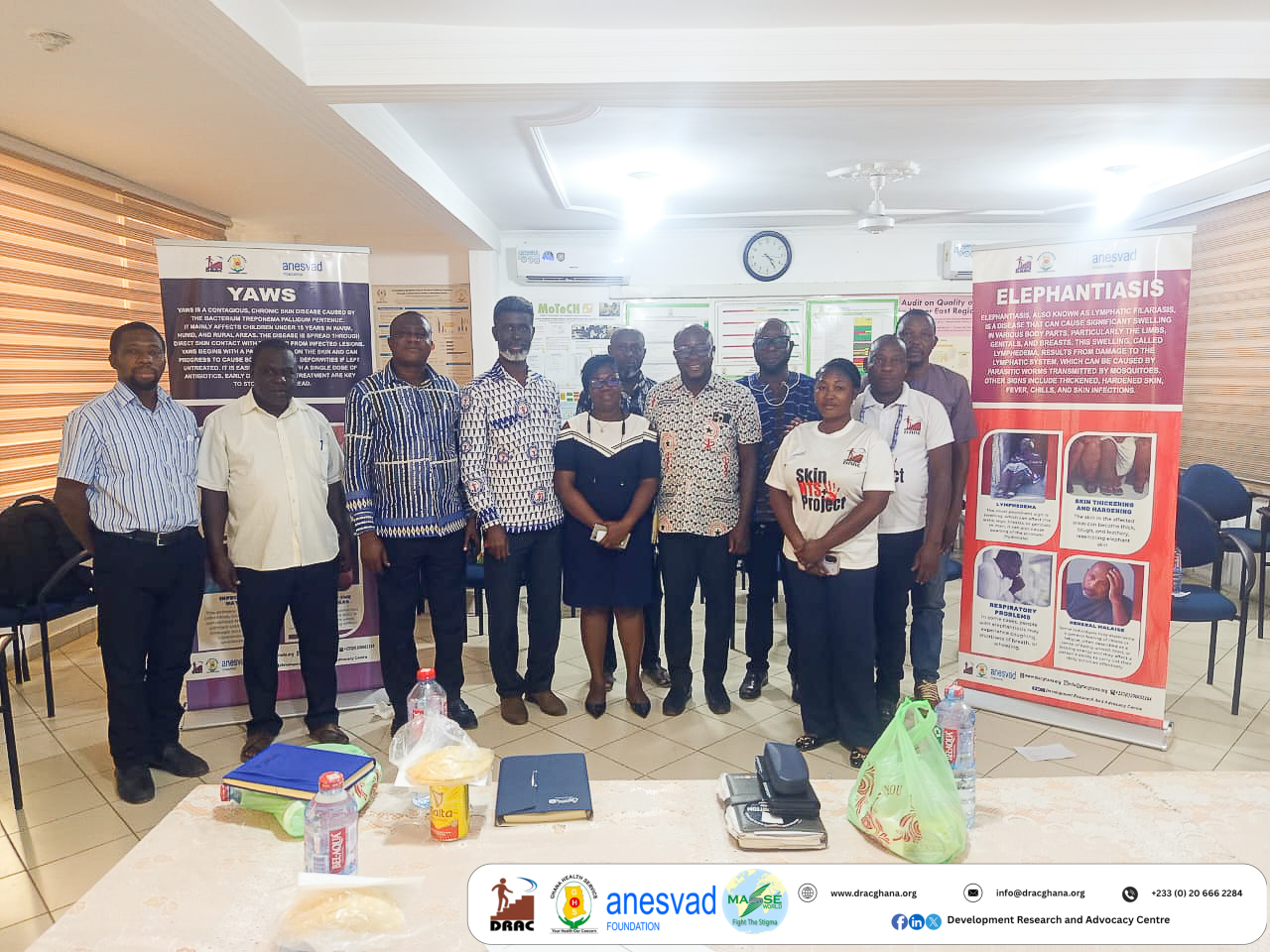
The meeting brought together senior GHS officials, including the Deputy Director of Public Health (DDPH), Regional Disease Control Officer, Regional NTDs Officer, Regional Health Information Officer, Regional CHPS Coordinator, Regional Health Promotion Officer, and the Regional Monitoring and Health Officer, alongside three representatives from DRAC.
Reaffirming Institutional Commitment.
In his remarks, the Deputy Director of Public Health reaffirmed GHS’s commitment to supporting civil society organizations in delivering quality health services. “Ghana Health Service remains committed to supporting civil society organizations in delivering quality health services to communities. Effective collaboration between GHS and NGOs is essential,” he stated.
Drawing from his experience in northern Ghana, the DDPH acknowledged that NTDs continue to pose a significant public health challenge and commended DRAC for its efforts in supporting affected persons.
“Neglected Tropical Diseases remain a significant public health challenge. We commend DRAC for providing hope and support to persons affected by NTDs, and GHS will continue to provide the necessary oversight and support to ensure the project succeeds.”
Quarter Three Report and Baseline Findings.
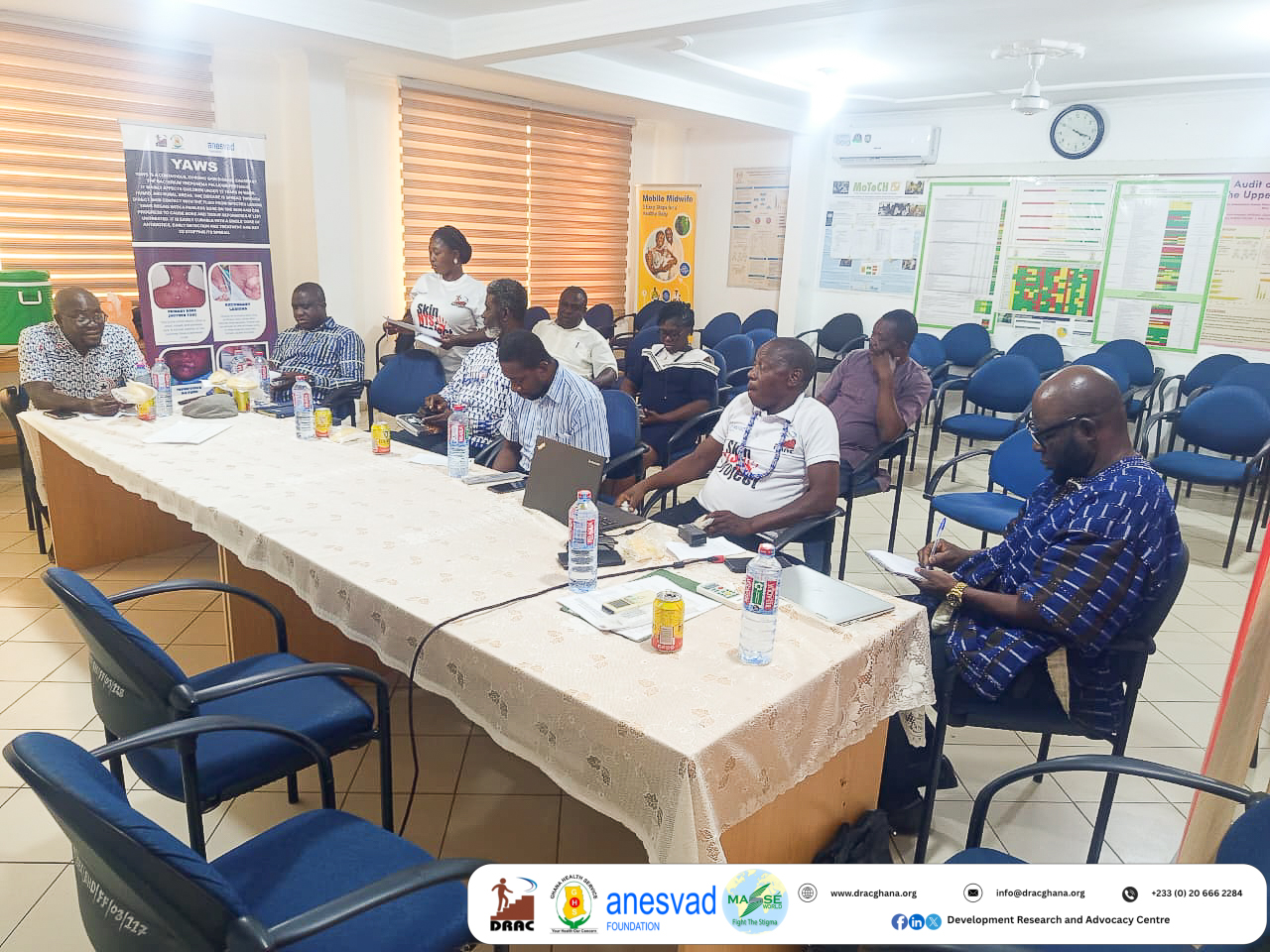
During the meeting, DRAC’s Program Director presented the Quarter Three Report, highlighting key findings from the project’s baseline survey. The presentation sparked constructive dialogue, with members seeking clarification on research tools used and offering suggestions to strengthen documentation and reporting processes.
One recommendation emphasized the need for improved labeling of project photographs with district names to enhance accountability and reporting accuracy.
The committee also stressed the importance of additional training for health staff to improve early detection of NTD cases.
Formation of NTD Associations: Empowering Affected Persons.
A major milestone reported by DRAC was the formation of 15 associations of persons affected by NTDs, comprising:
-
145 females
-
65 males
These associations operate at community, district, and regional levels, serving as platforms for knowledge sharing, peer support, and collective engagement with state institutions.
The gender disparity prompted discussion among committee members, with one participant inquiring about the higher number of women affected compared to men—an issue that warrants further investigation and targeted interventions.
The committee agreed that these associations are expected to play a vital advocacy role.
Clarifying Roles: Treatment and Social Protection.
During deliberations, a key question arose regarding whether DRAC directly provides medical treatment for NTD conditions such as hydrocele.
The Executive Director clarified:
This clarification reinforced the complementary roles of GHS and DRAC within the project framework.
Focus on Elephantiasis-Endemic Areas and WASH Interventions.
The committee observed that the project currently focuses on elephantiasis-endemic areas, leaving other NTD conditions in non-targeted areas.
DRAC explained that the emphasis on elephantiasis and leprosy is partly due to their strong linkage with water access, which informed the provision of boreholes in selected communities. Access to water remains critical for proper management and hygiene practices associated with these conditions.
Strengthening Access to LEAP and NHIS.
To enhance social protection outcomes, DRAC requested support from GHS to generate a list of affected persons to facilitate enrollment onto the Livelihood Empowerment Against Poverty (LEAP) program and the National Health Insurance Scheme (NHIS).
Following deliberations, the committee agreed that the Regional Director of GHS would issue an official letter to facilitate the generation of a list of affected persons across the four project districts.
District Health Directors are expected to support the process through Community Health Management Committees (CHMCs) and District Information or Disease Control Officers.
Addressing Resurgence and Sustainability Concerns
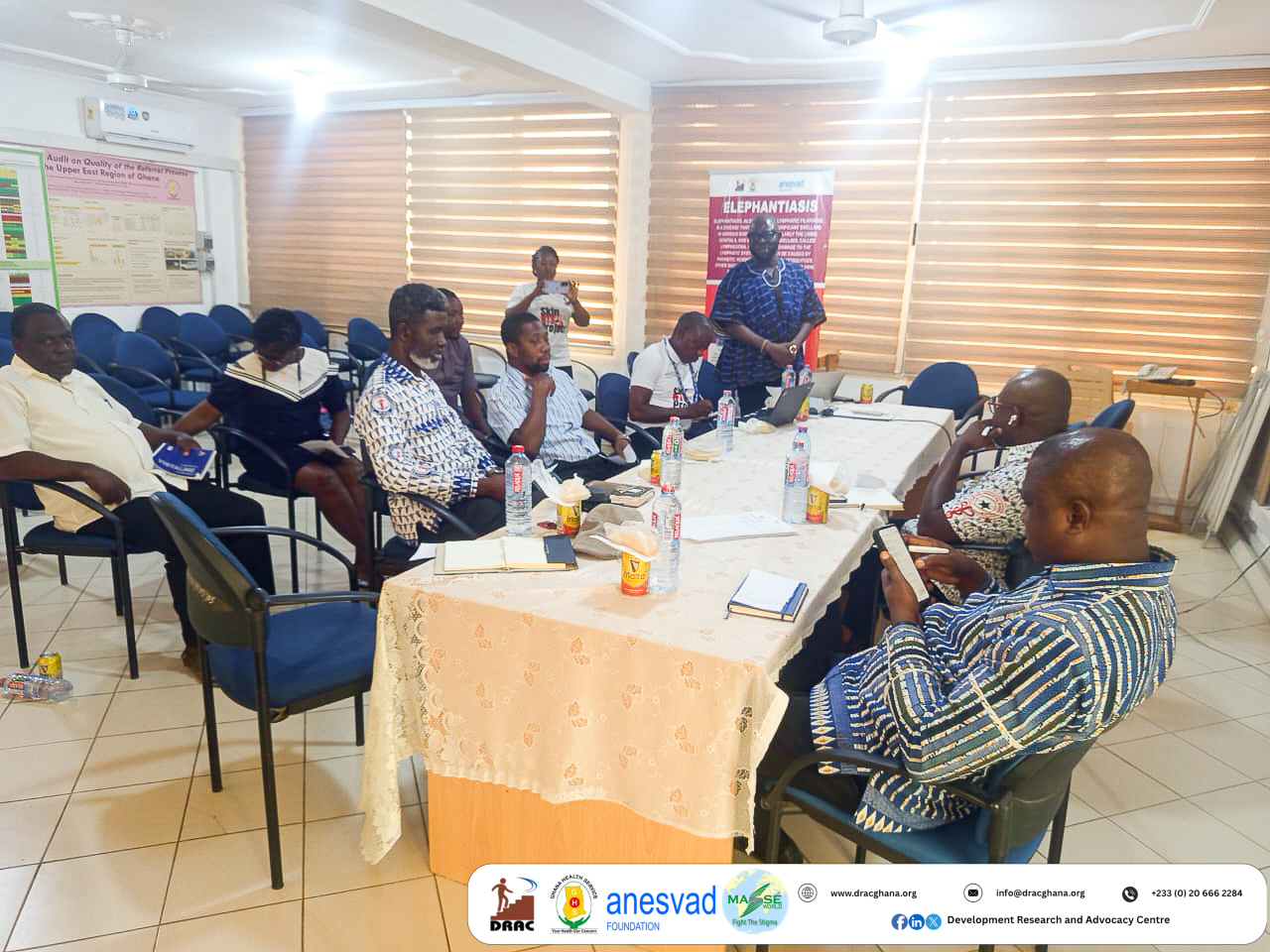
Members acknowledged concerns that NTDs are resurging due to inadequate funding and emphasized the need for intensified advocacy to address misconceptions surrounding the causes of NTDs.
The issue of sustainability was also raised, with committee members requesting clarity on how DRAC intends to continue supporting affected persons beyond the project lifespan.
The meeting concluded with renewed commitment from GHS to strengthen collaboration with DRAC and Anesvad.
Moving Forward Together.
The Steering Committee Meeting marked a significant step in reinforcing institutional alignment, improving data-driven decision-making, and ensuring stronger support systems for vulnerable populations in the Upper East Region.
Through continued partnership with the Ghana Health Service and support from Anesvad, DRAC remains committed to promoting inclusive health systems, strengthening community advocacy structures, and ensuring that persons affected by NTDs are not left behind.