

DRAC Convenes Stakeholder Engagement Meeting to Strengthen Social Protection for Persons Affected by NTDs DRAC Convenes Stakeholder Engagement Meeting to Strengthen Social Protection for Persons Affected by NTDs
Bolgatanga, Upper East Region | February 13, 2026.
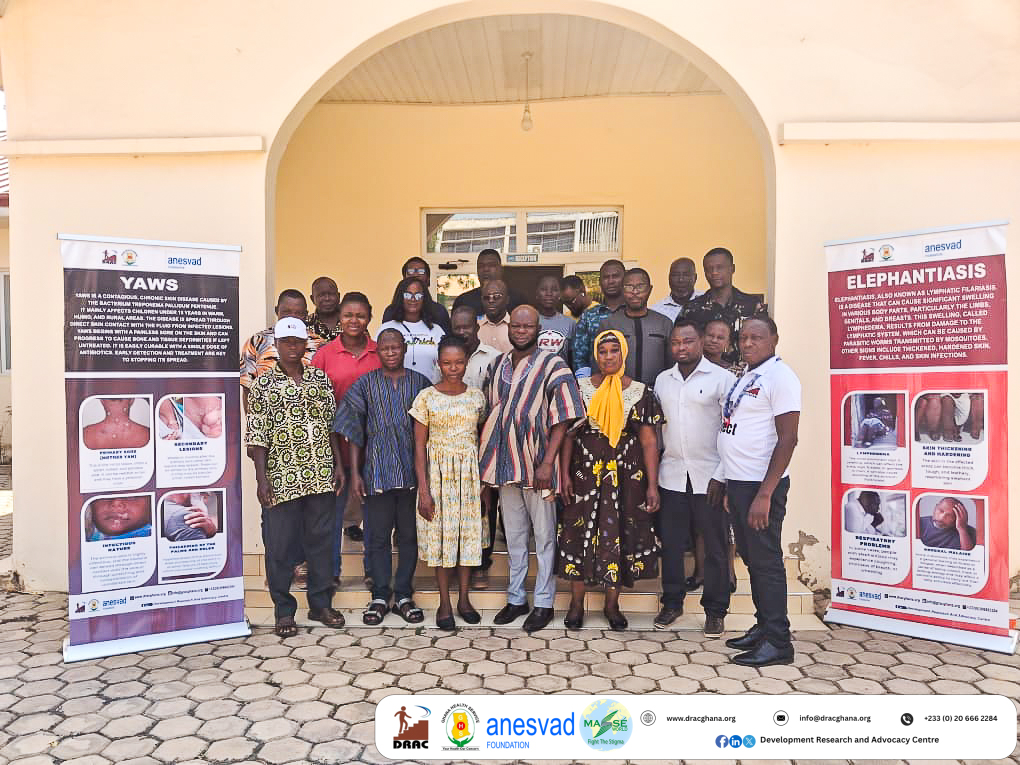
The Development Research and Advocacy Centre (DRAC), with support from the Anesvad Foundation, has held a high-level stakeholder engagement meeting in Bolgatanga as part of the implementation of the NTDs Plus Project, aimed at strengthening inclusive social protection and health access for persons affected by Neglected Tropical Diseases (NTDs) in northern Ghana.
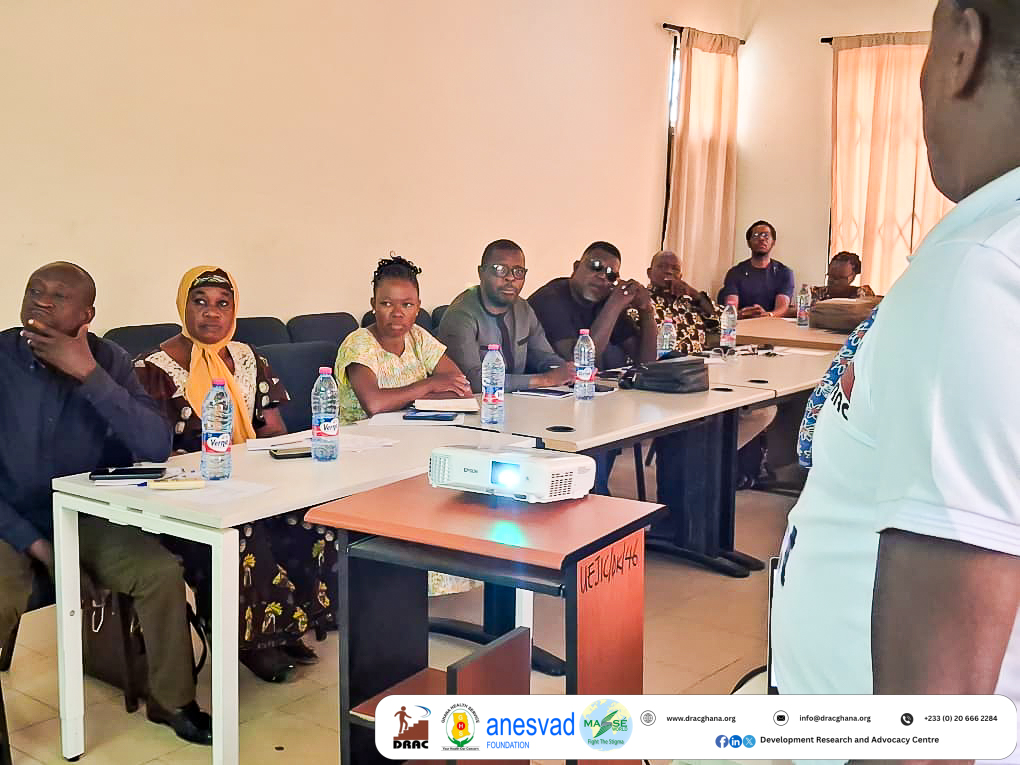
The meeting, held at GH-I KACE, brought together key stakeholders, including representatives from the Department of Social Welfare (DSW), Municipal and District Health Directorates, District Coordinating Councils, Planning Units, and partner Civil Society Organizations (CSOs). The engagement provided a platform to share project progress, present findings from the baseline assessment, solicit feedback, and agree on strategic action points to enhance project outcomes and sustainability.
Sharing Progress and Evidence-Based Findings.
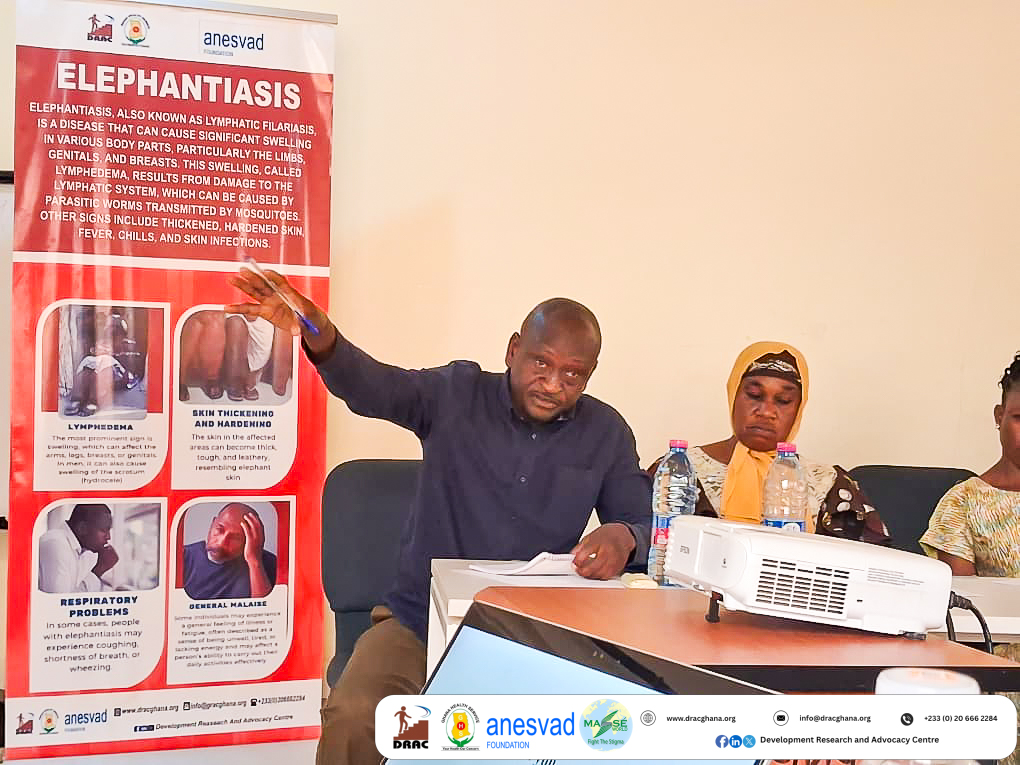
Presenting on behalf of DRAC, the project team highlighted key findings from the baseline assessment, progress in advocacy and stakeholder engagements, and early steps taken to facilitate the inclusion of persons affected by NTDs into critical social protection schemes such as the National Health Insurance Scheme (NHIS) and the Livelihood Empowerment Against Poverty (LEAP) Programme.
According to the presentation, the baseline findings revealed significant gaps in access to healthcare, social protection, and water, sanitation, and hygiene (WASH) services among NTD-affected persons, underscoring the urgent need for coordinated, multi-sectoral interventions.
Strengthening Multi-Sectoral Collaboration
Stakeholders unanimously stressed the importance of inter-sectoral collaboration in addressing the complex challenges associated with NTDs. The Department of Social Welfare (DSW) was identified as a key partner due to its extensive district-level presence and expertise in delivering social protection.
Participants also highlighted the crucial role of District Coordinating Councils and Planning Units in ensuring effective coordination, institutional engagement, and adherence to official communication protocols.
Key Agreements and Strategic Action Points
1. NHIS Registration
-
Securing a covering letter from the Department of Social Welfare (DSW) to facilitate NHIS registration for affected persons.
-
Engaging the Regional NHIS Directorate to support streamlined registration processes.
2. LEAP Registration
-
Obtaining verified and validated data from the Ghana Health Service (GHS).
-
Securing official documentation to enable the inclusion of eligible persons into the LEAP program.
3. Capacity Building
-
Organizing technical support and capacity-building sessions for NHIS and DSW staff to improve their understanding of NTDs and the specific needs of affected individuals.
4. Water, Sanitation and Hygiene (WASH)
-
Conducting an inventory of water points across operational communities to identify gaps and advocate for improved access to safe water.
5. District-Level Engagement
-
The Binduri District Assembly is formally inviting DRAC for a briefing session on project implementation and collaboration opportunities.
-
Scheduling follow-up meetings with key institutions to operationalize agreed action points.
A Shared Commitment to Inclusive Development
Participants commended DRAC for the progress achieved so far under the NTDs Plus Project. They reaffirmed their commitment to strengthening collaboration and institutional coordination to improve the lives of persons affected by NTDs.
Through this engagement, DRAC continues to demonstrate its commitment to evidence-based advocacy, inclusive development, and sustainable community impact, ensuring that vulnerable populations are not left behind in Ghana’s social protection and health systems.